
What Lemhi County Property Tax Records Actually Show
Lemhi County property tax records split between two jobs. The Assessor keeps parcels and market values. The Treasurer handles billing, collection, and special assessments, while a parcel card may show tax fields even though the county posts no bill online.
| Field | What It Shows | Where |
|---|---|---|
| Market value | Assessor's January 1 estimate under Idaho standards | Assessor and parcel card |
| Land and improvements | Separate value components and total | Parcel card |
| Exemptions or relief | Programs that may change taxable responsibility | Assessor and Idaho Tax Commission |
| Bill and payment status | Installments, charges, and payment information | Treasurer by phone or email |
| Taxing districts | Jurisdictions connected to the parcel | County GIS and tax record |
Neither figure is the bill. Market or assessed value is not a sale price either, and levies, exemptions, and district charges connect the valuation to what is actually collected.
Assessor Values, Treasurer Collects
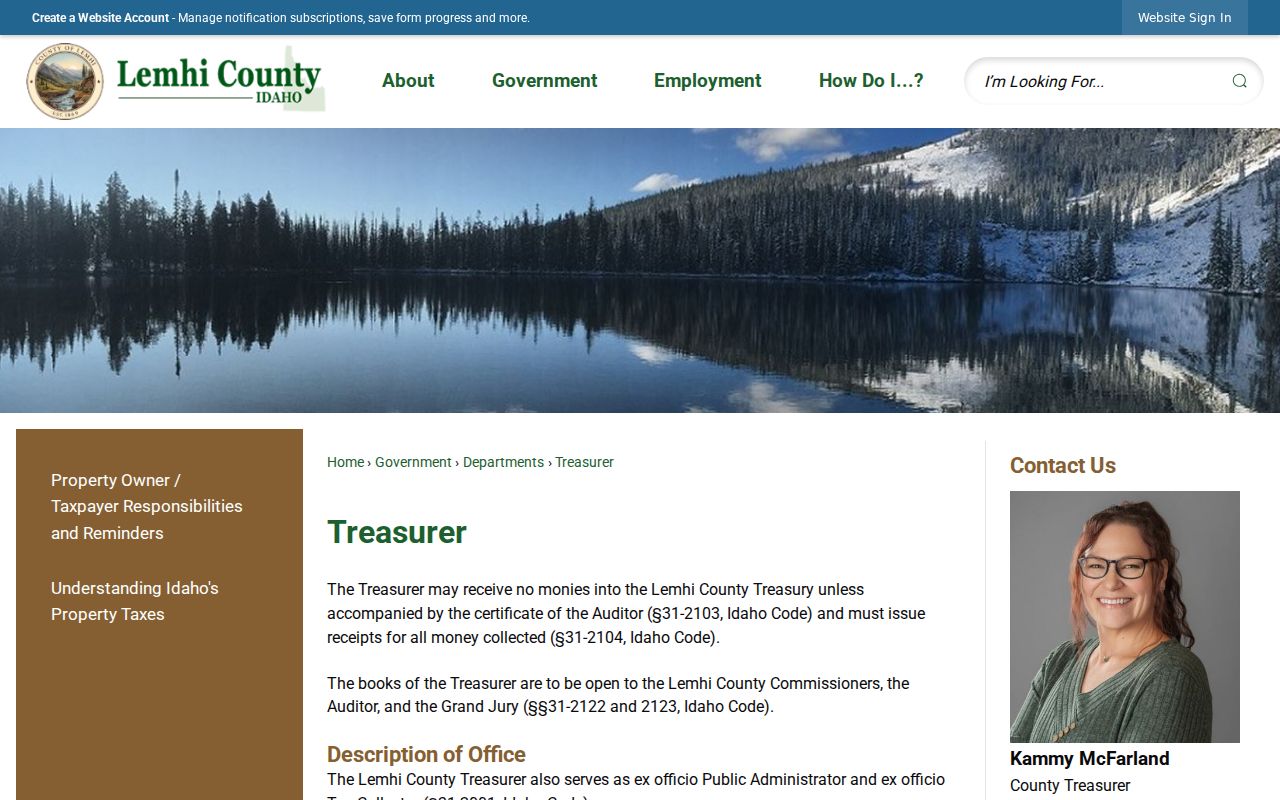
The Lemhi County Assessor values property, maintains parcel information, and answers assessment questions. The Treasurer collects property taxes and special assessments. The Treasurer's page lists contact details and the Point & Pay route. Take value disputes to the Assessor. Take bill, balance, or payment questions to the Treasurer.
Electronic payment access should not be mistaken for an online searchable tax bill.
How Lemhi County Establishes Market Value
Lemhi County sets assessments at market value each January 1. Reappraisal work runs on a periodic cycle. Assessors lean on comparable sales and the physical details of each parcel. These details include land, improvements, and neighborhood context.
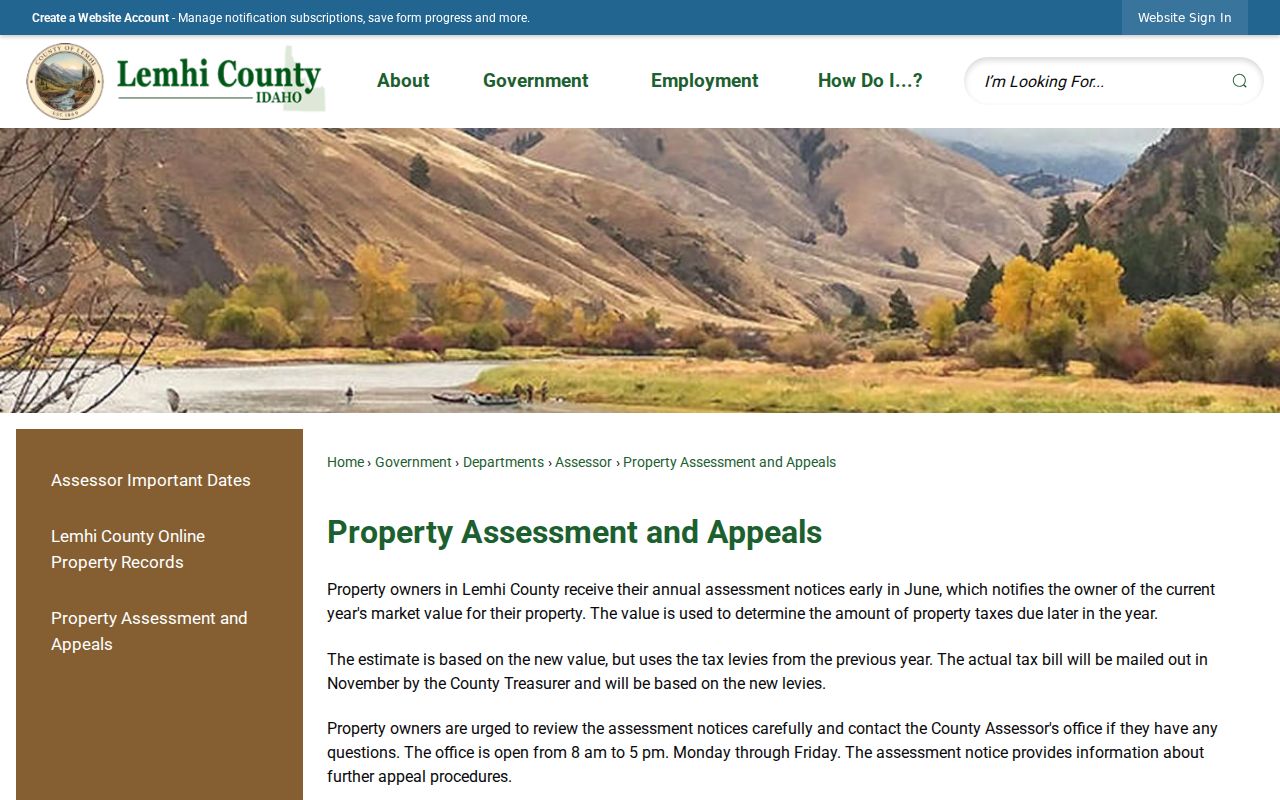
Before appealing a notice, study the comparable evidence behind it. The county's assessment guidance lays out the local process.
A notice starts the review; evidence finishes it.
Lemhi's Ratio Study Gives Context, Not a Parcel Price
The Idaho Tax Commission's 2024 ratio study appeared in 2025. It drew on 41 Lemhi County sales. The median assessment-to-sale ratio was 89.24 percent. The weighted related mean was 91.03 percent, and the coefficient of dispersion was 17.45 percent. These are countywide uniformity measures, not a prediction of one property's market value. The state ratio-study program explains the methodology. Pair it with parcel-specific evidence for any assessment question.
Getting a Lemhi County Tax Bill
Bills are not posted online. Start in the parcel application to pull the parcel identifiers, then contact the Treasurer by phone or email. Give the parcel number, owner display, physical address, and tax year. Confirm the amount and installment status before paying.
- Find the parcel number in the county ArcGIS application.
- Request the bill and payment status from the Treasurer.
- Compare parcel characteristics with the Assessor's notice.
- Verify exemptions, delinquency, and sale notices with the responsible office.
- Assessed value
- The value placed on the roll under Idaho rules.
- Mill rate / levy
- The rate applied through relevant taxing districts.
- Homestead exemption
- Qualifying primary-residence relief under current rules.
- Tax lien
- A claim arising from unpaid property tax.
December and June Are Lemhi Tax Checkpoints
December 20 and June 20 are the installment deadlines. A missing bill does not erase responsibility. Keep the correct mailing address on file, and call the Treasurer if a bill never arrives. Point & Pay takes card or e-check payments with convenience fees. Verify the current charge and parcel before paying.
Homeowner Relief Requires Current Eligibility Review
Idaho's homeowner exemption and property-tax reduction programs carry distinct residence, ownership, income, and filing requirements. The Idaho Tax Commission homeowner resources are the starting point. Confirm the current form and deadline with the Assessor.
Tax Sales Need Document-by-Document Verification
Lemhi County's current notice announces a tax sale through PublicSurplus on October 1 through 3, 2026. Recheck the live notice first. Dates, parcel lists, instructions, results, and post-sale instruments all depend on the current posting. A listing is not a transfer. A complete file connects the notice, parcel ID, legal description, tax amount, auction result, redemption information, and later recorded deed or certificate.
Read every tax year separately. The current assessment, a prior balance, and a receipt answer different questions. A GIS tax field can lag a payment, correction, penalty, or special assessment. For the year, installment, posting date, and remaining balance, ask the Treasurer.
Assessment review depends on accurate parcel facts. Check acreage, land class, improvement description, neighborhood code, and situs before comparing values, because one wrong characteristic can matter more than a broad market argument. Explain whether each comparable sale was arm's length. Also explain how its date, location, and improvements differ.
Separate exemption questions from reduction questions. Idaho's programs differ in definitions, income standards, occupancy rules, applications, and annual dates, with the state publishing guidance and the Lemhi Assessor handling local filings. An older approval does not promise current eligibility.
Verify any auction parcel by number and full legal description. Get the Treasurer's current status first. Check the Recorder later for any deed or certificate, since announcements, bid listings, and legal notices each document only a stage and none alone proves title transferred.
Build an appeal file that stands on its own. Start with the assessment notice. Then add the parcel card, photographs, corrected property facts, a map of each comparable, and any sale documents you can obtain. Include a short explanation of your adjustments. Label every item with its date and source. An organized package lets the Assessor separate a real valuation problem from a tax-rate issue. That rate issue sits outside the office's control.
Reconcile the notice and the bill by year before comparing them. A value notice may cover the upcoming roll. A payment screen reflects a bill already issued. Ask the Assessor which valuation date and roll year apply. Ask the Treasurer which tax year and installment the bill represents. Hold off on comparing numbers until the periods match.
For records you keep, save two items. Save the official bill response. Save a copy of the parcel card. The bill shows the Treasurer's charge and payment status. The parcel card preserves assessment fields and district context tied to its date. If the record later changes, those dated copies explain what supported your earlier decision. Mark certified or office-supplied material clearly. Do not mix it with a printed page from a search.
Challenging a Lemhi County Assessment
Act quickly after the notice arrives. Review the parcel characteristics and weigh the comparable sales. Raise any errors with the Assessor directly. If the disagreement stands, follow the county's appeal instructions tied to the fourth Monday in June. Useful support includes corrected physical facts and recent arm's-length sales. Photographs, an appraisal, and the reasons your chosen comparisons are better than the Assessor's also help.
Appeal window. Lemhi County's protest calendar is tied to the fourth Monday in June. Verify the exact current deadline and form on the official page before filing.
Read Lemhi's Annual Tax Sequence
Lemhi County's tax year turns on a January 1 valuation date. Assessment notices go out in early June. A taxpayer who disagrees should contact the Assessor right away. Check the parcel characteristics and comparable sales, and schedule the required protest appointment by the fourth Monday in June. Physical reappraisal happens at least once every five years. Market-based adjustments can land in other years, though. The Board of Equalization hears any timely protest. Reassessing a parcel cannot change how much tax a public body levies through its budget.
Tax bills are mailed in November. Lemhi County treats December 20 and June 20 as the payment checkpoints. A bill that never arrives does not erase the duty to pay. Keep your mailing address current. The county does not post bills online. So ask the Treasurer for the actual bill by phone or email. Save the parcel number, tax year, installment, payment confirmation, and any special-assessment line. That file beats a payment-screen receipt alone.
Payment Fees Are Not Tax Charges
The published Point & Pay terms list a card convenience charge of 2.5 percent with a two-dollar minimum. There is also a two-dollar e-check fee, and a twenty-dollar returned e-check fee. None of that is property tax. Confirm the live amount, parcel, tax year, and due balance before you submit payment. Keep the confirmation afterward. Value questions go back to the Assessor. Balance or receipt questions go to the Treasurer.
A complete payment file pairs the Treasurer's bill with the parcel number, tax year, installment, payment method, service fee, date, and confirmation. If a payment bounces or posts to the wrong parcel, those details hand the office a precise starting point. Do not treat the GIS tax amount as proof that a bill has been paid.