
What Lemhi County Deed Records Put on the Public Trail
Every recorded instrument leaves a public trail. Lemhi County deed records show who conveyed what, to whom, on which date, under which legal description, and with which filing reference. Recording puts the world on notice. It does not, however, promise a clear title.
| Deed Type | What It Does | Common Use |
|---|---|---|
| Warranty deed | Conveys an interest with stated covenants | Conventional transfer |
| Quitclaim deed | Conveys whatever interest the grantor has | Interest cleanup or family transfer |
| Grant deed | Records a grant of described land | Documented conveyance |
| Personal representative deed | Conveys through estate authority | Estate administration |
| Tax deed | Records a completed tax-process transfer | Tax sale |
A deed transfers an interest in land. Mortgages, easements, rights of way, and liens can all burden that interest. So the newest deed alone never tells the whole title story.
The Lemhi Recorder Counter Is the Current Source
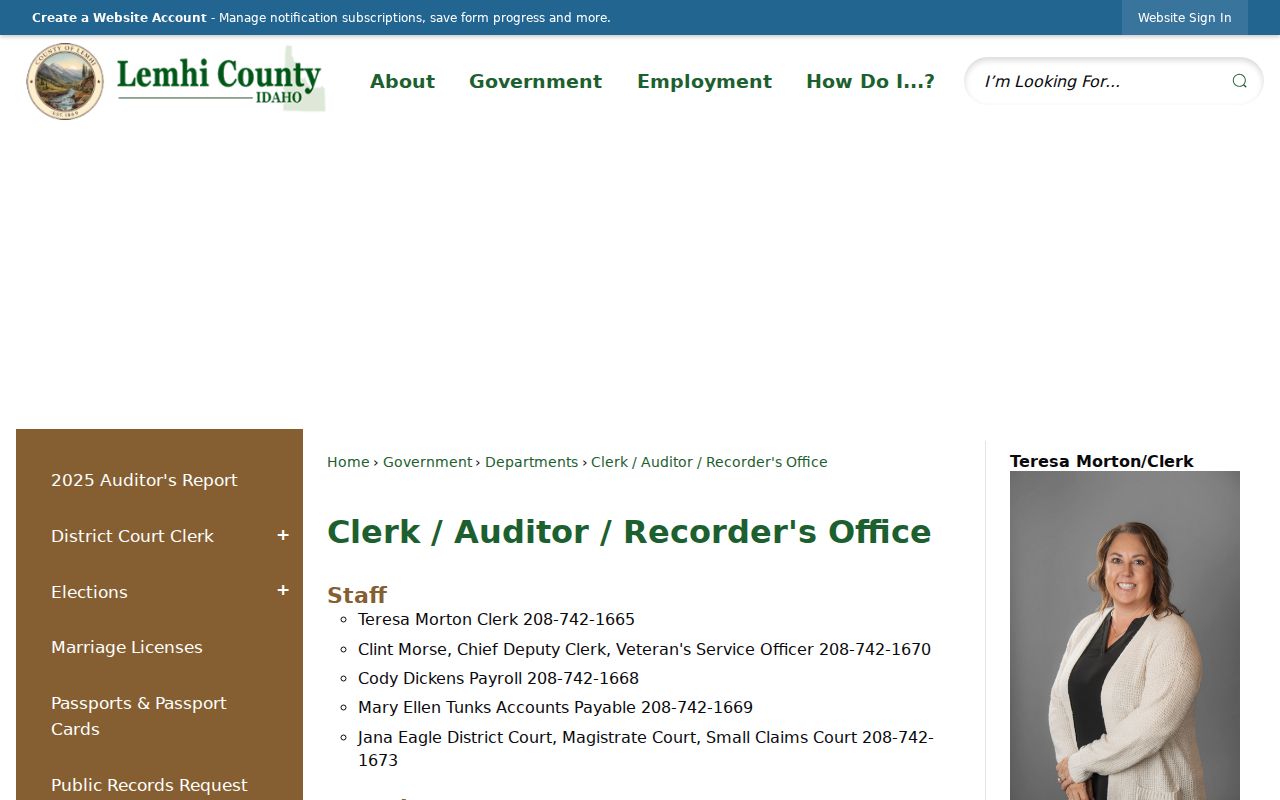
Lemhi County publishes no online grantor-grantee deed image portal. Every deed records request runs through the Clerk-Auditor-Recorder's Office, 206 Courthouse Drive, Salmon, at 208-742-1665, whether by phone, visit, or written request. That office is the county's official custodian of recorded instruments.
Precise parcel and instrument references make this route more effective.
Parcel Deed Fields Are Finding Aids
The county's ArcGIS parcel service lists deed fields with finding-aid value. PM_DEEDCDT and PM_DEEDRF1 through PM_DEEDRF5 appear alongside PARCEL_ID, MAPKEY, and PM_PAR_NUM. Copy those values exactly. Then ask the Recorder which one matches the recorded instrument. Remember that a map field is not a deed image.
Following Lemhi County's Grantor and Grantee Trail
A grantor gives up an interest. A grantee receives it. Start with the most recent confirmed conveyance, identify its grantor, then locate the deed through which that same grantee acquired the land. Work backward the same way, deed by deed. Match legal descriptions and references at each step, because names alone can mislead.
- Confirm the newest deed and read the grantee.
- Record its grantor, date, legal description, and reference.
- Find that grantor's earlier acquisition as grantee.
- Repeat in direct and indirect historic indexes for older transfers.
- Grantor
- The party giving the recorded interest.
- Grantee
- The party receiving it.
- Chain of title
- The linked sequence of conveyances for the same land.
- Book/Page vs Instrument #
- Two ways a recorded item may be referenced.
Historic Lemhi Deed Books Reach Back to 1868
The Lemhi County collection covers 1868 through 1964, with deed books plus direct and indirect indexes described in its catalog. Some images may require a login or a visit to a center. The historic catalog entry shows how the volumes are organized.
Write down the DGS reference, index volume, book, page, parties, date, and legal description so the courthouse can confirm each find.
Lemhi Recording Requirements Matter
The county's recordable-document guidance spells out the rules for originals, signatures, acknowledgment or notarization, grantee mailing details, copies, maps, and page presentation. A document that arrives signed but gets rejected never joins the recorded chain. Fees differ by instrument under the current recording schedule. Confirm the live schedule before you file or order copies.
Plats, Easements, and Legal Descriptions
Some descriptions point to other records. A lot and block, a section-township-range call, metes and bounds, a road reference, or an easement may need its own file. That could be a plat, survey, or right-of-way record. Recorder-held plats and county planning materials help interpret these references. None of them turns a historical map into a survey.
Legal-description continuity is the best guard against a false name match. Two people can share a surname. An entity can change its mailing address. A tract can even take a successor parcel number after a split. Compare land descriptions, acreage, adjoining calls, dates, and cross-references. Do this at every single step of the search.
Estate and trust transfers can break a simple sale-to-sale sequence. Note the capacity stated on the deed. Then turn to Idaho iCourt or the local clerk to sort out probate authority. Public court results exclude sealed and Rule 32-restricted information. A docket, in the end, never replaces the recorded conveyance itself.
Historic searches reward careful logging. Record the spelling searched. Record the index volume, the DGS reference, the deed book and page, the date, the document type, and the description. An image may not be available remotely. The Salmon Public Library, Idaho State Archives, University of Idaho microfilm collections, and the Recorder all offer fallback channels.
Lemhi County runs no property-fraud alert enrollment service. A safer habit is to keep the current recorded reference handy. Watch for unexplained changes in parcel deed fields, and call the Recorder at the official county number. If a suspicious instrument appears, request a copy and seek professional guidance.
Before ordering anything, settle on the form of evidence you need. Inspection alone can answer whether an instrument is even relevant to your parcel question. A plain copy works fine for working notes. A certified copy carries the Recorder's certification, which courts and agencies want when authenticity matters. Ask the office which forms it can produce for the specific instrument. Ask what the current charge will be. Not every historic image in an online catalog can be certified directly.
A good request names the document, not just the property. List the probable deed type, grantor and grantee spellings, and approximate execution and recording dates. Add parcel keys and map deed-reference values. Include the fullest legal description you have. Easement requests should describe the benefiting and burdened tracts when those are known. Plat requests need the subdivision, lot, block, and recording reference. Those details keep the office from pulling an unrelated instrument. Such an instrument can happen to share a name.
Read a returned deed from the outside in. Check the recording stamp and reference first. Then work through the parties and their stated capacities. Next come any consideration language and the vesting clause. Follow with the legal description or attached exhibit, reservations, exceptions, and easements. Finish with signatures, acknowledgment, and cross-referenced instruments. A parcel card summarizes only a fraction of that. Keep the full document. Note which facts came from it rather than from a summary. That habit protects the chain you are building.
When a link is missing, widen the record types. Probate orders can fill a gap. So can personal-representative instruments, tax proceedings, subdivision plats, boundary agreements, and court judgments. The Lemhi County Recorder confirms recorded instruments. The district court clerk holds the local court file. Each source documents a different legal act. The chain only becomes reliable when the parcel description ties them together.
Requesting a Lemhi County Deed Copy
The Recorder works fastest with precise details. Include the parties, an approximate recording date, the parcel number, instrument type, and legal description. For older Lemhi County deed records, also supply the catalog volume, DGS, and book and page. A narrow request saves search time and copy cost.
Recorded, not guaranteed. Lemhi County deed records show what reached the public record. They are not a title opinion, and unrecorded interests can exist.
A Lemhi Deed Request Needs Exact Clues
Before you send a request to the Lemhi County office, gather the details. These details make the search work. The form asks for your contact information. It also wants a clear description of the records. For deed records, that means naming the grantor and the grantee. You should add an approximate recording date, the instrument type, parcel keys, and the full legal description. Include any book and page reference or PM_DEEDRF value you already hold. Ask staff up front whether you can inspect the instrument before ordering copies. Ask whether the image comes plain or certified, and how the reference shows in the current index. Fees are simple. Recorded or filed copies run one dollar per page, and a certification seal costs extra. Confirm the current total with the office before you send payment.
Lemhi County's recording guidance also explains why a transfer you expected may be missing. A recordable conveyance has to arrive as an original. It must carry the required signature and acknowledgment. It must list the grantee's mailing address, and satisfy page and legibility rules. Plats and surveys follow their own standards. A private agreement that was never recorded will not join the public deed chain. And remember what an index entry actually proves. A recorded deed shows the instrument was accepted for filing. It does not show that no competing interest exists. A title professional reads the whole chain and weighs every exception.
Estate Transfers Can Bend the Chain
A chain of title sometimes jumps for reasons a plain buyer-to-seller sequence cannot explain. Probate is often the cause. A personal representative's deed, an heir-related instrument, or a probate file can fill the gap. Search the public iCourt portal by party or case number, keeping in mind that sealed and Rule 32-excluded information stays out of view. Then connect any public case lead back to the recorded instrument itself. Older Lemhi estate files may also surface in the 1864–1964 FamilySearch county collection. Court and archive records explain the context. The recorded deed supplies the land transfer.
Keep case citations and land citations separate. A docket gives you the county, case number, parties, role, event, and filing date. The deed gives the grantor, grantee, vesting language, consideration if stated, legal description, acknowledgment, recording date, and instrument or book/page reference. Suppose an estate file names land but no recorded transfer shows up. Ask the Recorder to search the decedent, the personal representative, the heirs, and the legal description across the relevant dates. Never infer a conveyance from an obituary, a will, or a court caption alone.
Place Terms Find Early Lemhi Deeds
For early Lemhi County deed records, place terms often beat a modern street address. Mining claims, railroad corridors, town lots, creeks, and rights-of-way can all serve as stronger search clues. Leadore's Gilmore & Pittsburgh railroad context helps pin down spellings and approximate dates. Salmon's historical newspaper runs do the same. Run those terms through the direct and indirect deed indexes. Retain the DGS image, book/page, parties, and legal description. A newspaper or local-history match adds context only. Verify the land connection in the deed book or a certified county copy.